MATTRESS BASICS
Does Mattress Tufting Matter?
Tufting can help hold mattress layers or loose fillings in place, but the word alone does not prove better comfort, durability, or value. The useful question is how the exact mattress is tufted and what else is inside it.
THE SHORT VERSION
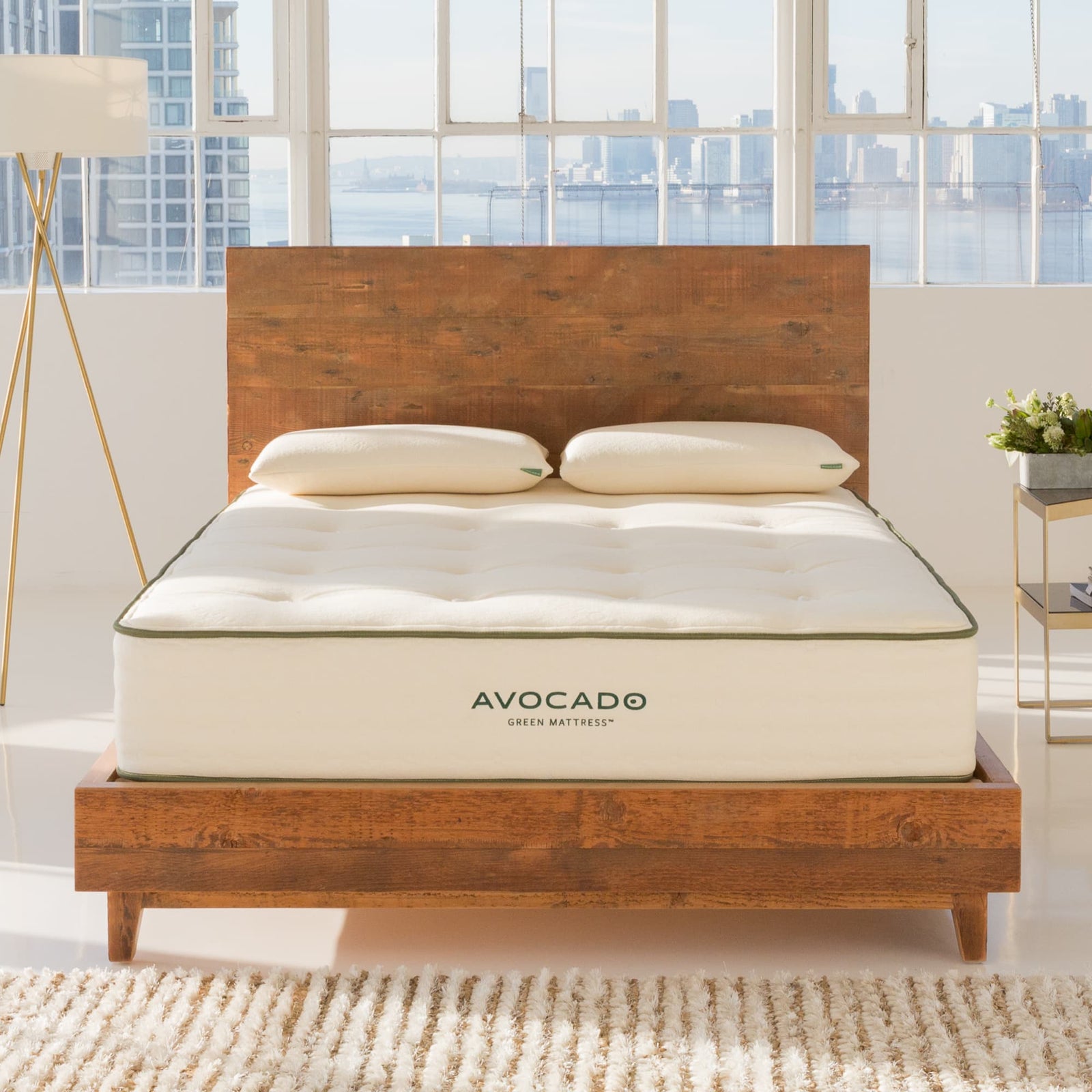
Mattress tufting can matter because it is one way to secure layers or loose fillings through the depth of a mattress. It may reduce shifting and can replace adhesive between some layers, depending on the design. It also creates visible depressions that can affect the surface shape. However, tufting is not a universal quality grade. A tufted mattress can still use very different foams, fibers, coils, edge systems, covers, and support designs. Ask whether the tufts pass through the full mattress or only part of the top, what materials they secure, whether adhesives are also used, and how the resulting surface feels to you. Compare the complete construction, price, trial, warranty, care instructions, and available firmness choices before treating tufting as a reason to buy.
Tufting mechanically connects mattress layers
In traditional mattress tufting, a long needle pulls a cord, ribbon, or strap through some or all of the mattress. A rosette, button, or other anchor holds tension at the surface. That tension compresses the materials around each tuft and helps keep them together.
Avocado currently describes fabric ribbons running through the full depth of several models and ending in wool rosettes. Vispring says its hand-placed tufts secure natural fillings. Woolroom describes wool pom-pom tufts as a way to reduce movement of fillings. These examples show the basic function, but they do not make every tufted mattress equivalent.
Tufting is different from quilting
Quilting usually stitches the cover to one or more shallow padding layers. It can create small patterns, channels, or a cushioned panel without passing through the entire mattress. Tufting typically reaches deeper and creates more concentrated anchor points.
Product photos can make the two methods look similar. A dimpled top, decorative buttons, or stitched circles do not tell you how deep the attachment goes. Look for terms such as full-depth tufting, needle tufting, tufting straps, fabric ribbons, or rosettes, then confirm the method with the manufacturer.
Adhesive use depends on the exact design
Some brands use tufting so comfort layers do not need to be glued together. Avocado says its Green Mattress comfort layers are mechanically anchored with ribbons and wool rosettes rather than adhesive. That is a specific construction claim about that product, not a rule for all tufted beds.
A mattress may combine tufts with hog rings, stitching, adhesive, or other fasteners in different areas. If avoiding a particular bonding material matters to you, ask whether the entire mattress is adhesive-free or only whether certain comfort layers are. Save the written answer and exact model name.
The surface will not be perfectly flat
Tufts pull material inward at spaced points, so visible depressions are part of the design. The spacing, anchor size, tension, padding above the tuft, and fitted protector can all influence how noticeable the pattern is.
Avocado's current guidance says slight variation in tuft depth can occur because the work is done by hand. It also tells owners to contact support if a tuft creates a persistent pressure point or visible distortion. That is a useful reminder to inspect the real sleep surface instead of assuming that every tufted top will feel the same.
Tuft count is not a quality score
More tufts are not automatically better. Avocado lists 18 tufts for its full and queen sizes and up to 24 for king sizes, while Royal-Pedic describes about 59 insertion points in one queen construction. Those totals belong to different mattresses with different materials, thicknesses, and tufting systems.
A dense pattern may compress fillings at more points, but count alone does not reveal the depth, tension, anchor strength, or quality of the layers being secured. Do not compare tuft totals as if they were standardized performance ratings.
Hand tufting describes labor, not personal fit
Hand tufting can require skilled assembly and may contribute to a higher price. It can also be part of a brand's craftsmanship story. Yet handcrafted does not answer whether the mattress has the firmness, response, edge behavior, height, weight, or materials you want.
Hypnos, for example, lists hand tufting on its Organic No.1 alongside pocket springs, organic fibers, edge construction, and medium or firmer tension choices. Each specification answers a different question. Judge the complete model, not the craft label in isolation.
Durability claims need context
Manufacturers commonly say tufting limits filling migration or supports structural integrity. The mechanical purpose is understandable, but it does not guarantee how long the whole mattress will retain its feel. Foam quality, fiber settlement, coil design, edge construction, base support, use, and care can all affect ownership.
A long warranty is also not a durability forecast. Read the measurable indentation threshold, exclusions, required support, rotation instructions, transportation rules, and remedy. Confirm whether a loose rosette, broken tuft, shifted filling, or surface depression is treated as a covered defect.
Care and handling can be different
Raised rosettes or buttons can catch on aggressive cleaning tools. Follow the exact care label and manufacturer instructions rather than pulling, trimming, or retensioning a tuft yourself. Use a protector that fits the total mattress depth without putting unusual strain on the surface.
Also check the mattress weight and handles before planning rotation. Tufted natural-fiber beds can be heavy, although tufting itself is not a reliable guide to weight. The manufacturer should state whether the mattress is one-sided, double-sided, or designed for seasonal turning.
Compare tufted and non-tufted models fairly
A non-tufted mattress is not automatically a shortcut. Foam beds may use adhesives, molded pieces, zippered encasements, or other assembly methods. Some mattresses secure layers internally without visible rosettes. Avocado notes that its Eco Organic model uses a different method without external tufts.
For both designs, compare layer materials and thicknesses, support core, firmness options, edge design, finished height, weight, base rules, trial, warranty, delivery, and total price. If tufting matters because you want fewer adhesives, verify that exact claim separately.
Use a tufting checklist before checkout
Ask the seller or manufacturer for model-specific answers. Marketing language about luxury or tradition is less useful than a clear construction description.
- Full-depth, partial-depth, internal, or decorative tufting
- Ribbon, cord, strap, button, or rosette materials
- Layers or fillings the tufts actually secure
- Whether adhesive or other fasteners are used elsewhere
- Tuft spacing, surface depth, and expected variation
- Firmness choice, comfort layers, coils, and edge design
- Finished height, weight, compatible base, and care rules
- Trial length, return costs, warranty threshold, and tuft defects
The practical answer
Mattress tufting matters when its construction role matches something you value, such as mechanically securing loose natural fillings or avoiding adhesive between certain layers. It can be a meaningful detail, especially when the manufacturer explains exactly how it is done.
It should not outrank personal fit or the full specification. Treat tufting as one construction method, inspect how the surface feels, and verify the materials and policies around it. A well-explained tufting system is useful evidence. The word tufted by itself is not proof that a mattress is more comfortable, more durable, or worth a higher price.
Sources
- Avocado Green Mattress: Current Construction and Needle-Tufting Details
- Avocado: Tuft Counts by Mattress Size
- Avocado: Tufting, Rosettes, Surface Variation, and Support Guidance
- Vispring: Hand Tufting and Natural Fillings
- Hypnos: Organic No.1 Construction and Hand Tufting
- Woolroom: Beulah 1000 Tufting and Construction
Sources were reviewed for this article on November 14, 2026.