COMPARISONS
Pillow Top vs. Euro Top Mattresses: What's the Difference?
Pillow top and Euro top describe how an added upholstery section is built into the mattress. Neither label tells you enough to predict firmness, durability, temperature, or fit on its own.
THE SHORT VERSION
A traditional pillow top is an added upholstery panel sewn onto the top of a mattress, usually with a visible seam or narrow gap where the panel meets the mattress body. A Euro top places the added upholstery beneath the outer cover so the top appears flush with the mattress edges. That construction difference can change the shape and initial surface presentation, but it does not guarantee a specific firmness, material, temperature, edge feel, or lifespan. Compare the exact filling, thickness, firmness option, support core, total height, base requirements, and trial terms. Choose the model whose complete design fits you, not the label that sounds more luxurious.
Start with the construction difference
A pillow top is an extra upholstery section attached to the top surface of the mattress. It often looks like a separate cushion sitting above the main mattress body, with a visible seam or recessed line around the edge. The panel may contain foam, fiber, latex, wool, or a combination of materials.
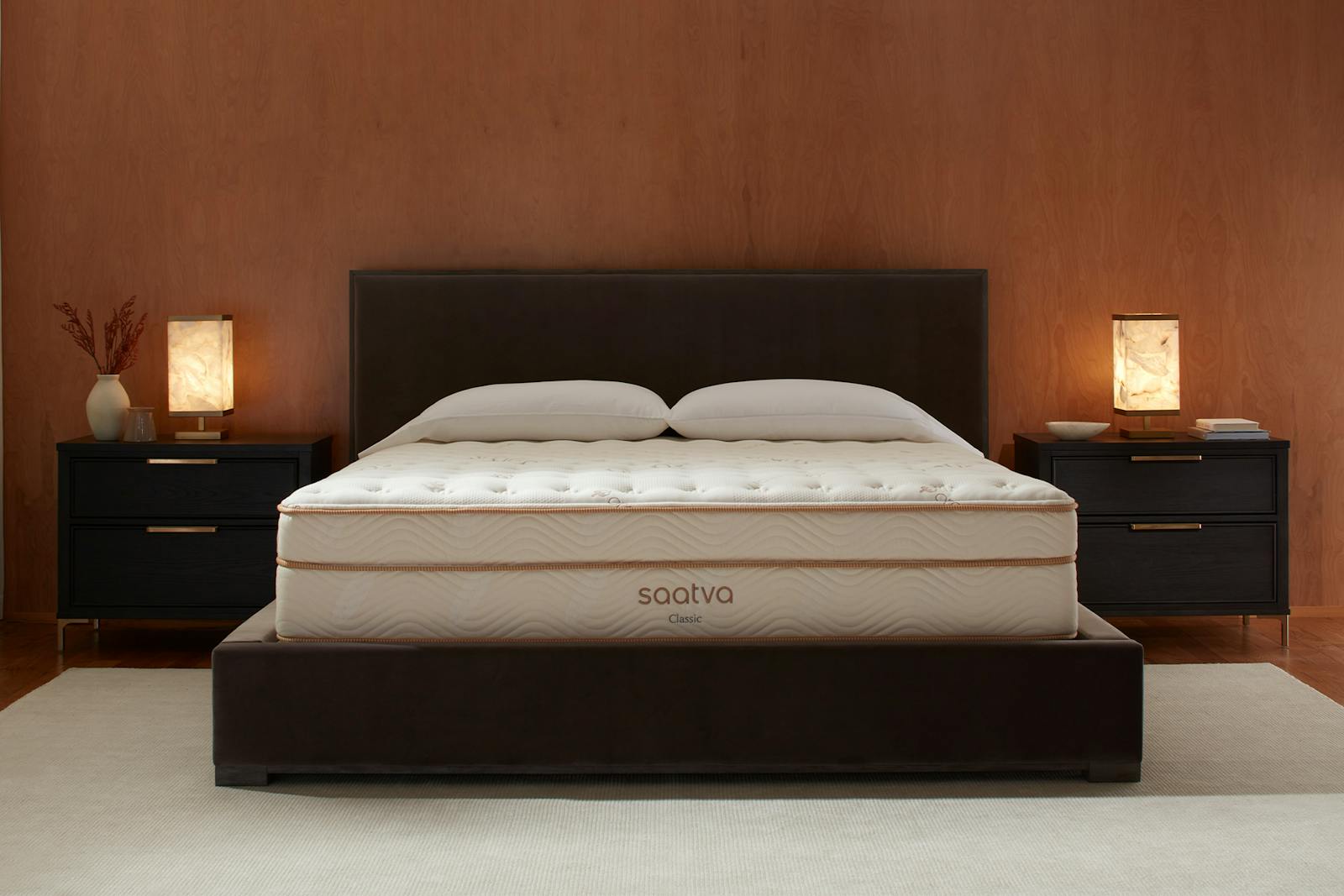
A Euro top, sometimes called a Euro pillow top, places the added upholstery under the mattress cover and carries it to the perimeter. The result usually has straighter sides and a more integrated appearance. Saatva describes its Euro top as stitched beneath the cover, while Serta describes Euro-top padding as extending to the edge of the bed.
Do not treat either label as a firmness rating
Both designs can be made soft, medium, or firm. The top style tells you where the upholstery sits, not how much the surface will compress under you. Firmness depends on the materials in the top, their thickness and density, the transition layers, the support core, quilting, and the exact firmness option selected.
Current product lines make this clear. Stearns & Foster offers Estate pillow-top models in plush and firm feels. Saatva lists Euro pillow-top mattresses across soft, medium, and firm choices. A shopper who assumes every pillow top is soft or every Euro top is firm could eliminate a suitable model for the wrong reason.
Compare the first-contact feel separately
The top panel affects the first layer you feel, so describe the surface in practical terms. Does it feel lightly cushioned, deeply padded, slow to recover, springy, quilted, or relatively flat? Then notice the resistance underneath after your body settles. Two mattresses with similar-looking tops can behave very differently once the deeper layers engage.
Use the exact model and firmness in any showroom comparison. If you are shopping online, look for a complete layer description and ask the seller what material and approximate thickness sit in the top section. Avoid translating tufting, piping, or a tall profile into a comfort conclusion without specifications.
Keep edge shape separate from edge support
A Euro top usually has a flush, squared-off perimeter because the upholstery reaches the edge beneath the cover. A traditional pillow top may taper inward at the seam where its separate panel is attached. That visual difference can change how the usable surface appears near the border.
It does not prove how steady the edge will feel. Edge behavior also depends on the underlying foam rails, reinforced coils, overall firmness, base, and how you use the perimeter. If edge use matters, compare the exact model while sitting, lying near the side, and changing position. Do not substitute the top label for an edge-support test or detailed construction information.
Ask what is inside the top
Pillow tops and Euro tops are not single materials. The filling might include polyfoam, memory foam, latex, fiber, wool, microcoils, or several layers. Each model can combine those materials in different amounts and arrangements. A broad label such as gel, natural, cooling, or premium still needs a specific explanation.
Record the material type, layer thickness when published, placement, and any certification that influenced your choice. A certification for one foam or textile component does not automatically cover the whole mattress. If the seller provides only the top style and no meaningful construction details, compare that uncertainty with models that disclose more.
Judge temperature claims by evidence
Neither top style guarantees a cooler or warmer sleep experience. The amount of contouring, cover, upholstery materials, coil or foam support core, protector, sheets, blankets, room conditions, and sleeper preferences all affect the result. A surface that feels cool at first touch is not necessarily evidence about the whole night.
If a product makes a cooling claim, ask what component was tested, what it was compared with, how long the test lasted, and whether the evidence covers the finished mattress. Treat airflow or moisture language as a claim to examine, not a conclusion created by the words pillow top or Euro top.
Plan for mattress height and bedding
An added upholstery section can increase total mattress height. Check the exact profile, then add the frame and foundation heights to calculate the finished bed height. Make sure the result works with your headboard, windows, room, and preferred height for getting in and out of bed.
Measure the mattress depth with any protector or topper that will remain under the fitted sheet. Compare that number with the sheet maker's pocket-depth limit. The words deep pocket are not a measurement. A tall pillow-top or Euro-top mattress may require different sheets, and that accessory cost belongs in the total purchase comparison.
Evaluate wear through materials and policy
Do not assume one top style always lasts longer. Long-term change depends on the quality and amount of upholstery, how deeply it compresses, the support system, sleeper use, the base, care, and manufacturing. All cushioned surfaces can show normal settling, and a visible body impression is not automatically a covered defect.
Read the warranty's indentation threshold, measurement method, exclusions, required foundation, and claim process. Ask whether the mattress should be rotated and whether its construction permits it. Save the care instructions and warranty for the exact model. A broad durability claim is less useful than clear materials, care rules, and written coverage.
Compare price through the whole mattress
A Euro-top model is not automatically a better value than a pillow-top model, and a pillow top is not automatically an inexpensive add-on. Price can reflect the brand, materials, coil system, height, size, upholstery, delivery, services, warranty, and promotion. Compare complete products at the same size and dated checkout price.
Include the required base, bedding changes, delivery, removal, and possible return fees. If two versions share the same support system, identify exactly what the upgraded top adds. Pay more only when the added construction addresses a priority you identified before seeing the price or the luxury language.
Use a model-level comparison
Place the exact pillow-top and Euro-top models side by side. Record the firmness option, top materials, top thickness if published, complete layer design, support core, edge construction, total height, weight, required base, price, trial, return costs, and warranty. If you cannot find a field, mark it unknown rather than guessing from appearance.
Serta's current Classic line, for example, includes a plush Euro-top configuration and a separate enhanced plush pillow-top configuration. That does not make one universally better. It gives shoppers two complete constructions to compare. The important differences are the actual layers, feel option, height, cost, and policy attached to each model.
Choose by tradeoff, not terminology
Choose a traditional pillow top when the exact model provides the surface cushioning, deeper response, edge behavior, height, and price you prefer. Choose a Euro top when its integrated shape and complete construction fit those priorities better. Either can be the wrong choice when the underlying mattress, firmness, base requirements, or return terms do not work for you.
The best final question is not which label wins. Ask which exact mattress gives you the more suitable combination of surface feel, movement, support, dimensions, evidence, and purchase protection. Use the home trial to confirm the complete model, not to test a category assumption.
- Top style and visible attachment method
- Exact upholstery materials and thickness
- Firmness option and deeper support design
- Perimeter construction and expected edge use
- Total mattress and finished bed height
- Base, sheet, protector, and rotation requirements
- Complete delivered cost and return risk
- Warranty terms for impressions and support
Sources
- Saatva: Euro Pillow Top and Standard Pillow Top Construction
- Stearns & Foster: Estate Pillow Top Options
- Serta: Classic Standard Plush Euro Top
- Serta: Classic Enhanced Plush Pillow Top
- Saatva: Current Euro Pillow Top Mattress Options
Sources were reviewed for this article on October 26, 2026.