MATTRESS BASICS
Do More Mattress Layers Mean Better Quality?
A long layer list may describe a sophisticated design, ordinary construction details, or a different counting method. Compare what each layer does before comparing how many there are.
THE SHORT VERSION
No. More mattress layers do not automatically mean better quality, comfort, support, cooling, or durability. Brands may count covers, quilting, thin fiber sheets, adhesives, transition foam, coils, edge rails, and base fabric differently. A three-layer foam mattress can be clearly engineered, while an eight-layer hybrid can include several thin components that need to be evaluated separately. Compare each layer's material, thickness, density or firmness when disclosed, position, purpose, certification scope, and connection to the layers around it. Then check the support core, finished height, mattress weight, base requirements, trial, return fees, warranty, and complete price. Layer count is useful for reading a construction diagram, but it is not a quality score.
Layer counts are not standardized
One brand may count the cover as a layer while another begins with the first foam sheet. A hybrid maker may count the coil unit, perimeter reinforcement, and base fabric separately. Another may group them as one support system. Thin fire-barrier or moisture-barrier components may appear in one diagram and remain unnumbered in another.
Because the counting rules differ, a seven-layer mattress is not necessarily more complex than a four-layer mattress. Compare diagrams component by component instead of ranking the totals.
Start with the job of each layer
Most mattress components serve one or more roles: surface feel, cushioning, transition, deeper support, edge reinforcement, fire compliance, moisture management, or appearance. The name of a layer does not prove how well it performs that role.
Ask what would change if the layer were removed. A transition layer may keep softer foam from compressing directly against a firmer core. A thin quilt layer may shape the initial surface. A base foam may stabilize the layers or coil unit above it. Purpose is more informative than position in a numbered list.
Thickness matters more than the count
Three one-inch foam sheets and one three-inch foam sheet use the same total vertical space, but they can be made from different materials and firmness levels. A layer count without thickness does not show how much of the mattress is comfort material, transition material, or support core.
Record the thickness of every disclosed layer and make sure the numbers reasonably reconcile with the finished mattress height. Allow for the cover, quilting, fire barrier, and compression around curved or tufted surfaces.
Material specifications still matter
For flexible polyurethane foam, density, firmness, support factor, and fatigue testing answer different questions. The Polyurethane Foam Association explains that density measures mass per unit volume, firmness measures surface resistance, and support factor compares resistance at different compression levels.
Ten unnamed foam layers provide less usable evidence than two or three layers with clear material, thickness, and relevant specifications. Keep memory foam, responsive polyfoam, latex, fiber, and coil components in their correct categories.
More layers can create a smoother transition
Multiple layers can be used to change resistance gradually from a softer surface to a firmer core. They can also place different materials in targeted positions or separate materials that serve different functions. That can be a reasonable design choice.
It is not automatically superior. The finished result depends on thickness, firmness, support factor, coil design, adhesives, cover, and how the components interact. A simpler construction can also create a deliberate progression.
Current products show the range
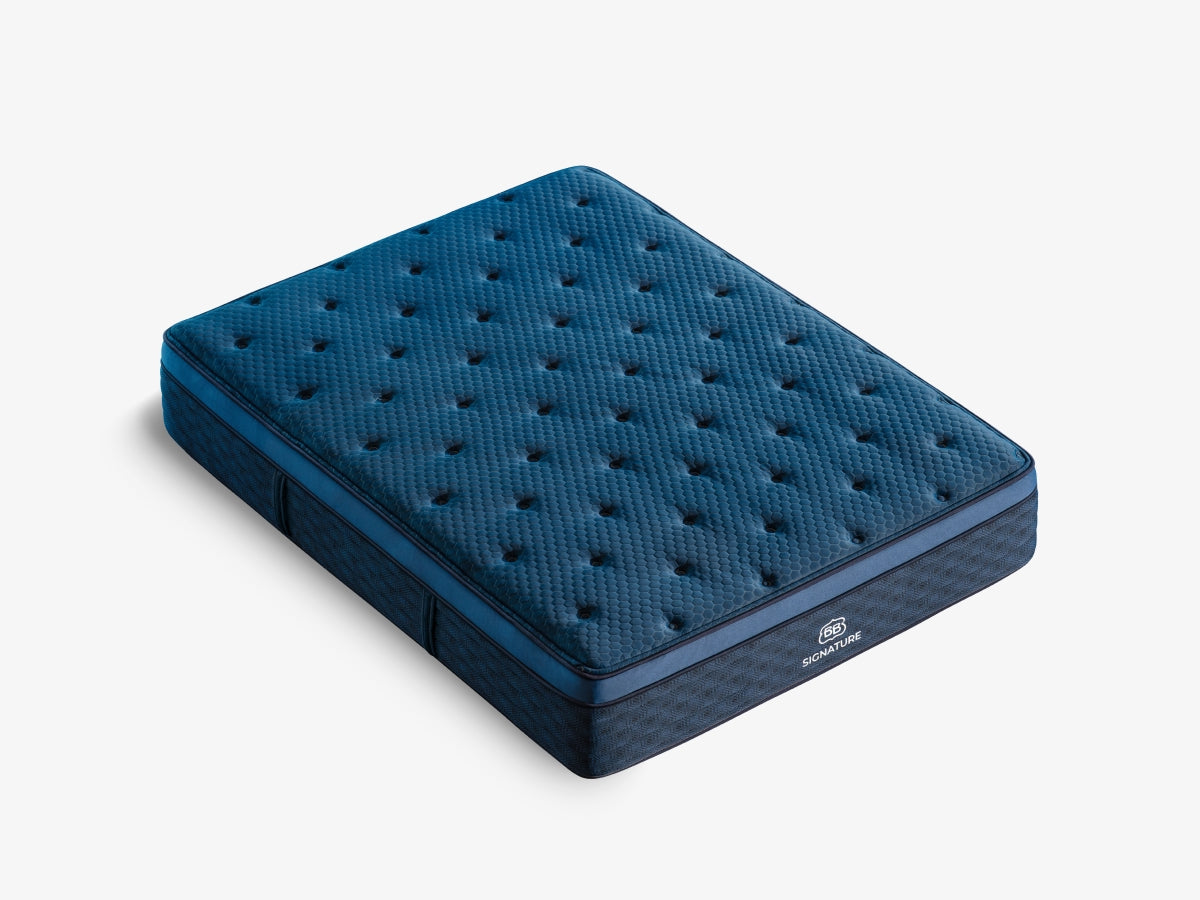
Tuft & Needle currently diagrams the Original with a cooling cover, Adaptive foam, support foam, and base foam. Brooklyn Bedding currently lists the Signature Hybrid at seven layers without the optional pillow top and eight layers with it. The Signature also identifies an eight-inch coil core and 3.5 inches of comfort foam.
Saatva presents the Classic through a Euro pillow top, lumbar foam, individually wrapped comfort coils, a deeper steel coil base, and edge reinforcement. These products use different materials and counting styles. Their layer totals cannot be compared without translating each diagram into common fields.
An optional layer changes more than the number
An added pillow top or comfort layer can change finished height, surface cushioning, sheet fit, mattress weight, and price. Brooklyn Bedding currently lists the Signature Hybrid at 13.25 inches without its optional pillow top and 14 inches with it.
Compare the exact configuration you would order. A review of the standard model may not describe the pillow-top version, and a showroom sample may use a different firmness or option.
More interfaces create more design choices
Every boundary between layers requires the manufacturer to manage shifting, adhesion, airflow, and how the materials compress together. Layers may be glued, quilted, tufted, zipped into a cover, or held by the surrounding construction.
That does not make a multilayer mattress unreliable. It means shoppers should ask how the construction is assembled and whether layers are removable, replaceable, or intended to remain fixed. Do not assume a zippered cover permits rearranging or removing internal components.
Layer count does not predict durability
Durability depends on the properties of the materials, component thickness, stress, construction, use, base, and care. The foam association describes flex-fatigue tests that compare changes in foam height and firmness after repeated compression. A marketing layer count provides none of that evidence.
Read the warranty for measurable defects and exclusions, but do not treat its length as a life expectancy. Ask for relevant component specifications and keep the support base within the manufacturer's requirements.
Height and weight have practical costs
Additional materials can increase height and weight, although a greater layer count does not always mean more material. Check the Queen weight, package dimensions, delivery method, and whether the mattress needs rotation.
Add the foundation height before choosing sheets or judging ease of getting into bed. A thicker mattress may require deep-pocket sheets and more help to move. Those tradeoffs should earn a place in the comparison alongside construction.
Build a common layer table
Translate every finalist into the same categories. Leave unknown fields blank rather than borrowing specifications from a similar model.
- Exact model, generation, size, firmness, and optional top
- Cover, quilting, fire barrier, and surface treatments
- Comfort materials, thicknesses, and relevant specifications
- Transition materials, thicknesses, and stated purpose
- Coil or foam support core, zones, perimeter, and base layer
- Finished height, mattress weight, assembly, and base rules
- Trial, return fees, warranty, and complete delivered price
The practical answer
More layers can support a thoughtful design, but the number does not prove quality. What matters is whether every component has a clear role, adequate thickness, useful specifications, and a sensible relationship to the rest of the mattress.
Compare materials and dimensions first, then consider height, weight, price, setup, trial, and warranty. Choose the documented construction that fits your priorities. Do not pay more simply because a product page found more pieces to number.
Sources
- Tuft & Needle: Original Mattress Construction
- Brooklyn Bedding: Signature Hybrid Layers and Dimensions
- Saatva: Mattress Construction Comparison
- Saatva: Classic Coil and Construction Specifications
- Polyurethane Foam Association: Foam Properties and Performance
- Polyurethane Foam Association: Support and Firmness
Sources were reviewed for this article on November 9, 2026.