COUPLES
What Motion Isolation Means for Couples
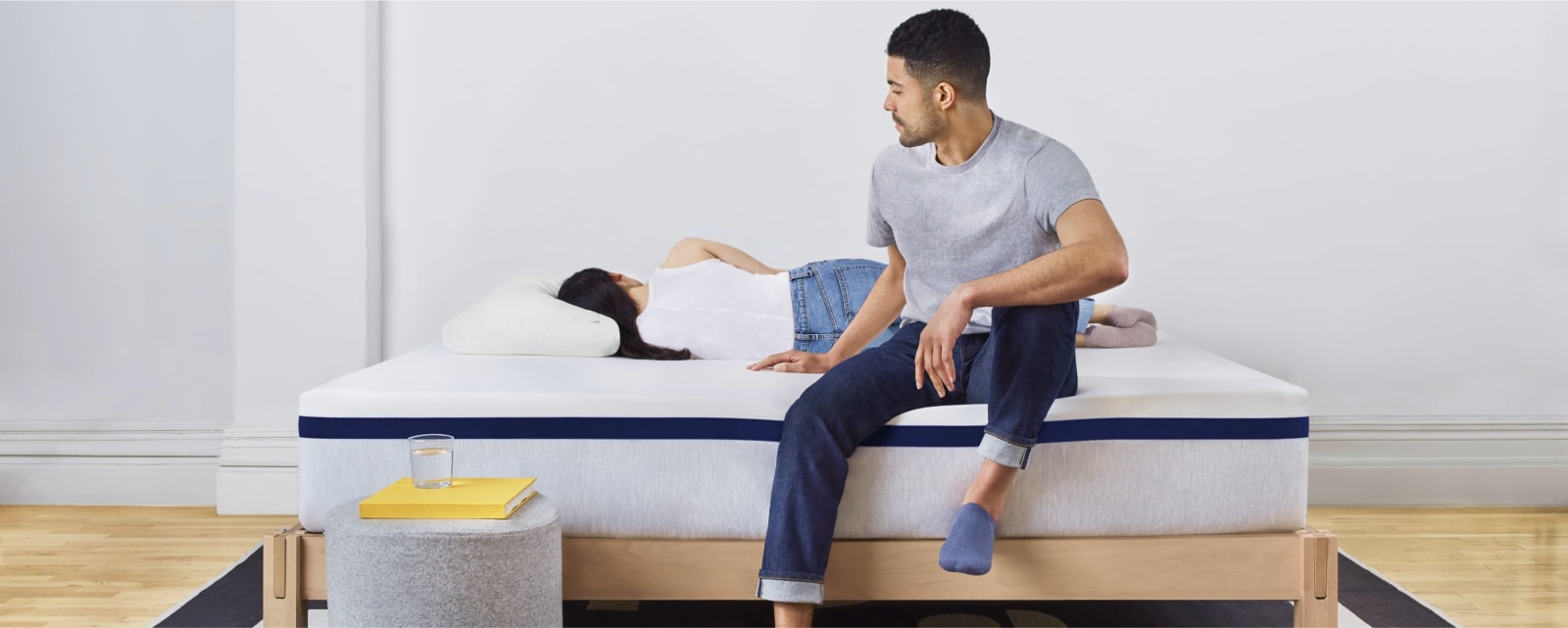
Motion isolation is the mattress's ability to limit how much one sleeper notices movement from the other side. It can matter greatly for some couples, but it should not erase firmness, response, space, and policy from the decision.
THE SHORT VERSION
Motion isolation matters most when one partner wakes easily, the couple keeps different schedules, someone changes position often, or pets share the bed. Compare how the exact mattress responds to common movements, not just a category label or unsupported score. Better isolation can reduce noticeable transfer, but the same construction choices may also produce a slower, more enveloping surface that some sleepers find harder to move across.
Define the disturbance you want to reduce
Motion isolation describes how well a mattress contains movement near its source instead of carrying it across the surface. The useful outcome is not zero motion. It is less noticeable disturbance from the movements that actually happen in your bed.
List those movements before shopping. One partner may turn frequently, get into bed later, rise earlier, sit on the side, or leave for the bathroom during the night. A dog may jump onto the corner. These events place different forces on the mattress, so one general motion score cannot describe all of them.
Separate motion isolation from bounce
Motion isolation and bounce are related, but they are not exact opposites. Bounce describes how quickly and strongly the surface pushes back after compression. Motion transfer describes how much of a disturbance reaches another part of the bed. A mattress can feel responsive beneath one sleeper without sending every small movement to the other side.
Do not use a spring count, foam label, or word such as responsive as a substitute for the comparison. Comfort-layer thickness, material response, coil design, zoning, firmness, and the bed base all influence the result. Ask how the complete model behaves rather than trying to predict it from one component.
Decide how sensitive each partner is
Each person should rate how often the other partner's movement is noticeable and whether it affects sleep. Someone who sleeps through turning may give motion isolation a low priority. Someone who regularly notices a partner entering the bed may make it a requirement.
Answer separately before discussing a compromise. Couples sometimes focus on the more vocal preference while overlooking the sleeper who adapts silently by moving toward the edge or changing schedules. A useful shortlist reflects both experiences and identifies which disturbances are occasional versus repeated.
Bed size changes the distance movement travels
A larger bed places more space between sleepers and can reduce how often their bodies or bedding interact. That does not change the mattress materials, but distance can change what each person notices. If a couple feels crowded, a size change may solve more of the problem than choosing a different construction in the same size.
More width also costs more and takes additional room. It can require a new frame, base, sheets, protector, and bedding. Compare the total cost and room footprint with the expected benefit. Strong motion isolation cannot create personal space that the mattress dimensions do not provide.
Construction offers clues, not guarantees
Slow-response foam can absorb some movement near the source, while highly responsive materials may make certain movements easier to notice. Individually wrapped coils can respond more independently than a connected coil unit. These are useful construction clues, not promises about the complete mattress.
An all-foam bed is not automatically quiet for every couple, and a hybrid is not automatically disruptive. Thick comfort layers can change how a coil system feels. Firmness can change how deeply movement engages the layers. Perimeter reinforcement and zoning can also make response vary across the surface. Compare exact models and firmness options.
Balance isolation with ease of movement
Materials that contour closely and recover slowly may reduce some surface movement, but they can also make repositioning feel more deliberate. A quicker surface may make turning easier while allowing more movement to travel. The right balance depends on which experience bothers the sleepers more.
Combination sleepers and people who change position often should not chase maximum isolation without considering response. A mattress that limits partner disturbance but frustrates the moving sleeper is not a complete solution. Each partner should describe the preferred level of contouring and how easily they want to turn.
Keep edge support in the comparison
When one partner moves away from the other to reduce disturbance, the perimeter may become part of the usable sleeping area. A mattress with a less steady edge can make that outside space feel narrower, even if its materials isolate movement well.
Compare motion and edge behavior as separate features. A reinforced perimeter does not prove strong motion isolation, and a quiet center does not establish how the side will feel. Couples on a full or queen may care more about this combination than a solo sleeper centered on a king.
Check the frame, base, and nearby furniture
Not every nighttime rattle comes from the mattress. Loose frame hardware, flexible slats, an uneven floor, a headboard touching the wall, or a nightstand pressed against the bed can turn ordinary movement into noise or vibration. A damaged base can also change how the mattress responds.
Inspect and tighten the complete setup before replacing a mattress for movement alone. Confirm that the base meets the new model's requirements and supports the mattress evenly. If a showroom uses a different foundation from the one at home, treat the comparison as directional rather than identical.
Use reviews carefully
A reviewer's motion score can look precise without telling you what was moved, where force was applied, which size and firmness were used, or how the result relates to your sensitivity. Scores from different publishers may use different methods and should not be combined as if they share one scale.
Look for a clear description of the exact mattress, configuration, base, and comparison method. Use the result to build questions, not to predict an outcome. A report about one generation, height, or firmness may not apply to the version currently in your cart.
Run a consistent couple comparison
In a showroom, compare two or three exact candidates using the same routine. One partner should lie in a normal position while the other turns, sits on the side, gets up, and returns. Switch roles because partners may have different sensitivities and movement patterns.
Notice which movements travel and which do not. Also compare firmness, contouring, ease of turning, edge feel, and finished bed height. This is a personal comparison, not a laboratory result. Its value comes from repeating the same relevant actions across the shortlist.
Confirm the choice during the home trial
At home, use a compatible base and the bedding you plan to keep. Give each partner a chance to enter later, rise earlier, change positions, and use the edge. Heavy blankets, separate comforters, pets, and the frame can affect the real experience, so evaluate the complete setup.
Read the trial and return policy before buying. Note any adjustment period, condition requirements, fees, pickup process, and final date. If motion remains a problem, record which event causes it. That evidence helps you decide whether a different response, larger size, steadier base, or separate bedding is the more targeted change.
Weight motion isolation against the full fit
Make motion isolation a high priority when repeated partner movement is a known disturbance. Give it moderate priority when movement is noticeable but manageable. Give it low priority when both sleepers rarely notice the other and prefer to optimize different features.
Then choose the mattress that balances both partners' needs. Do not accept an unsuitable firmness, unwanted contouring, difficult movement, poor edge fit, or unclear return policy solely for a stronger motion claim. The goal is not the quietest mattress in theory. It is a credible shared fit in the room and budget you have.
- Which exact partner movements cause disturbance?
- How often does the problem happen?
- Would a larger bed create useful separation?
- How much contouring and response does each sleeper want?
- Will either partner rely on the perimeter?
- Is the current frame or base adding vibration or noise?
- Does the evidence apply to the exact model and firmness?
- Can the home trial protect the final decision?