COUPLES
How Couples Can Choose a Mattress Together
The best shared mattress is rarely the one that wins every category for one person. A stronger choice starts with two separate preference lists, then makes the compromises around firmness, movement, space, temperature, and cost explicit.
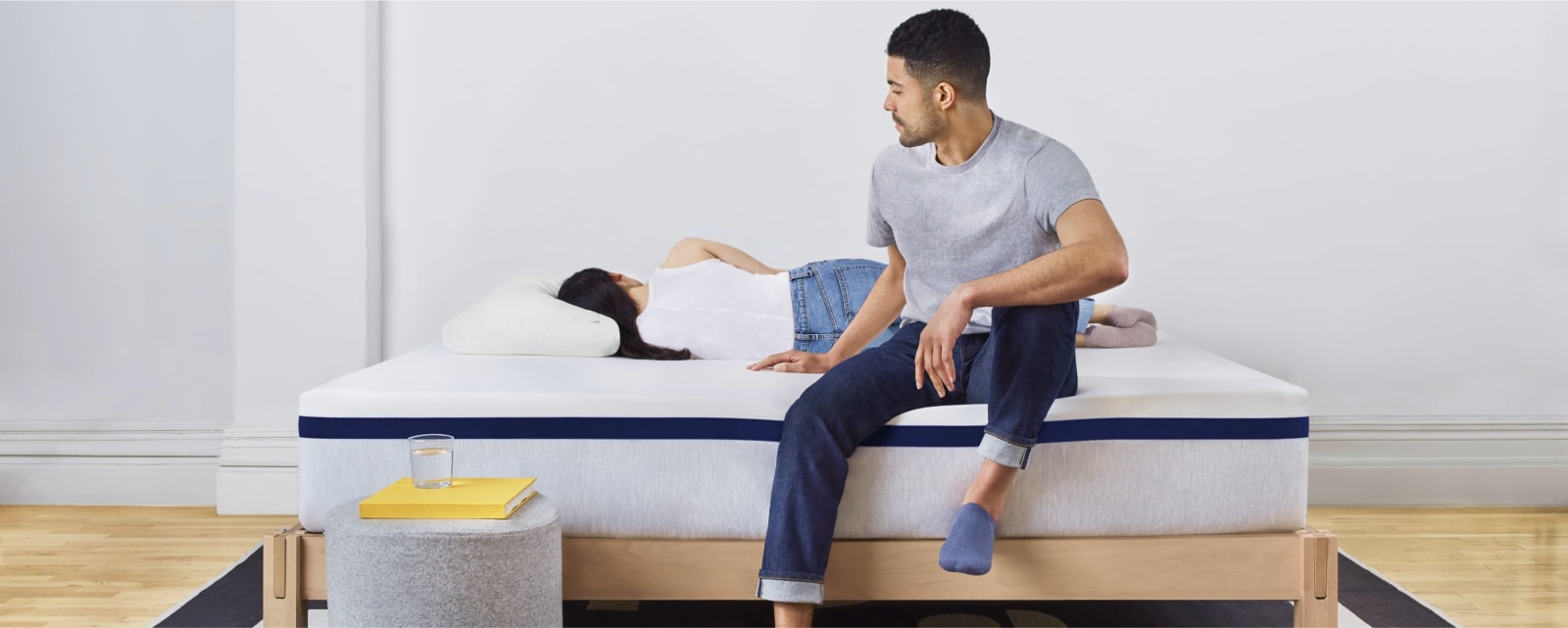
THE SHORT VERSION
Each partner should first list sleep position, firmness preference, desired contouring, motion sensitivity, temperature preference, and budget concerns separately. Identify the requirements that cannot be compromised, then compare mattresses within the overlapping range. Evaluate the exact model, bed size, edge feel, ease of movement, foundation rules, home trial, and return costs before choosing together.
Start with two preference lists, not one compromise
Couples often begin by searching for a universally comfortable mattress or defaulting to a medium feel. That can hide the real decision. Two people may differ in primary sleep position, body size, preferred amount of sink, sensitivity to movement, temperature preference, and how much space they use. A middle label does not automatically solve those differences.
Each partner should complete the same short list independently. Record primary and secondary sleep positions, current mattress complaints, preferred firmness direction, desired contouring, ease of movement, motion sensitivity, edge use, temperature concerns, and budget. Comparing two written lists makes areas of agreement visible and prevents the more vocal shopper from defining the entire purchase.
Separate requirements from preferences
Mark each item as a requirement, a strong preference, or a bonus. A mattress size that fits the room may be a requirement. Less partner disturbance may be a strong preference. A particular cover material may be a bonus. Keep the requirements list short, because two long lists of nonnegotiable features may leave no realistic options.
When the lists conflict, ask which person is more affected by the issue and how often it occurs. A small firmness preference may be easier to compromise on than repeated disturbance from movement. A feature used every night deserves more weight than a marketing detail that sounds appealing but does not address either person's actual experience.
Find an overlapping firmness range
Firmness labels are not standardized, so do not average two numbers from different brands and treat the result as precise. Use each person's current mattress as a reference. One partner may want more surface give, while the other wants less sink. Translate those requests into relative language before comparing the available firmness choices for an exact model.
If both people can accept the middle of a model's range, begin there and compare the neighboring softer and firmer versions. The softer option may add contouring but make movement feel slower. The firmer option may keep both sleepers nearer the surface but provide less initial cushioning. The goal is an acceptable shared range, not an identical description from both partners.
Treat motion and movement as separate questions
Motion isolation describes how much movement one partner notices when the other changes position or gets out of bed. Ease of movement describes how readily a sleeper can turn or rise on the surface. A mattress can perform differently on those two priorities. Deeper, slower contouring may reduce some surface movement but make repositioning feel less immediate.
More responsive materials may make turning easier, but a sensitive partner may notice more bounce. Decide which problem matters more in your household. Consider different schedules, frequent position changes, and whether either person wakes easily. Look for descriptive evidence tied to the exact model, but avoid treating unsourced scores or broad construction labels as guarantees.
Decide how much usable space you need
Bed size can have as much influence on a couple's experience as the mattress construction. More width gives each person additional room to change positions and may reduce accidental contact. The tradeoffs are higher mattress and bedding costs, more floor space, and a heavier setup that can be harder to move.
Edge feel matters more when both people regularly use the full width or sit along the perimeter. A stable-feeling edge can make more of the surface feel usable, but an edge label alone does not reveal the experience. Construction, firmness, body size, and sitting versus lying near the side can all change the impression. Compare the exact model rather than assuming every hybrid or reinforced edge behaves alike.
Discuss temperature without trusting a single label
Partners can experience the same bed at different temperatures. One person may prefer close contouring while the other dislikes having more material near the body. Coils create open space within a support core, while foams and latex vary in structure and response. Covers, protectors, sheets, blankets, room conditions, and how closely two people sleep also influence the experience.
Treat cooling language as a feature description, not a promise. If temperature is a major concern, compare construction and contouring alongside the bedding you expect to use. A less enveloping feel or a larger bed may be a more meaningful change for some couples than a named cooling treatment.
Know when one shared feel may not be enough
Some preference gaps are too wide for a single firmness to resolve. One partner may strongly prefer a plush, contouring surface while the other wants a firm, highly responsive one. Before forcing a compromise, check whether the model offers dual-firmness construction or whether two separate mattresses can fit within a split setup.
Personalization adds tradeoffs. A split configuration can create a center seam, require different sheets or bedding, complicate adjustable-base choices, and increase total cost. It can also give each person more control. Compare the complete setup price and daily practical details, not just the advantage of selecting two firmness levels.
Build a three-model comparison together
Limit the final shortlist to three exact mattresses. Give each partner the same scorecard, then compare answers only after both are complete. Record the full model name, generation, firmness, comfort materials, height, price in your chosen size, delivery method, compatible foundation, trial length, return fees, pickup process, and warranty terms.
Keep one clear reason each candidate could work and one clear risk. A foam model may limit some noticeable movement but feel too slow for one partner. A responsive hybrid may make turning easier but introduce more bounce. A larger mattress may improve personal space but exceed the room or budget. The best choice is the compromise both people understand before ordering.
- Candidate 1: strongest match for the shared firmness range
- Candidate 2: strongest match for motion and movement priorities
- Candidate 3: best balance of space, temperature, and budget
- For each model: verify the exact size, firmness, and construction
- Before checkout: save the applicable trial and return policy
Use the home trial as a joint decision period
A home trial helps manage uncertainty, but both partners should understand its rules before purchase. Verify any required adjustment period, return or exchange fees, pickup process, condition requirements, and whether a retailer applies different terms from the manufacturer. Save a dated copy of the policy and the order configuration.
During the trial, discuss the same priorities used to build the shortlist: firmness, contouring, movement, partner disturbance, usable space, edge feel, and temperature. Avoid letting one unusually good or bad night settle the decision. If persistent pain or another health concern is driving the purchase, seek guidance from a qualified health professional rather than relying on a mattress label or shopping article.