MATTRESS BASICS
How Thick Should Your Mattress Be?
A thicker mattress is not automatically better. The useful question is whether the exact profile fits your body preferences, support system, bedding, room, and daily routine as one complete setup.
THE SHORT VERSION
There is no ideal mattress thickness for every shopper. Start with the exact model's layer design and firmness, then calculate the finished bed height by adding the mattress, foundation, and frame. Check whether the profile works with your base, adjustable setup, sheets, headboard, delivery route, and preferred height for getting in and out of bed. Compare actual models rather than assuming more inches mean more support, comfort, or durability. Current major-brand lineups include mattresses from about 8 inches to more than 18 inches, which shows that profile is a design choice, not a universal quality grade.
Thickness is a measurement, not a verdict
Mattress thickness, also called height or profile, is the distance from the bottom of the mattress to the top of its cover before anyone lies on it. It tells you how tall the product is. It does not tell you by itself how firm, supportive, responsive, durable, or suitable the mattress will be.
Two 12-inch mattresses can have very different covers, comfort layers, transition layers, and support cores. A 10-inch model can use a design that fits your priorities better than a 14-inch alternative. Treat thickness as one specification to verify after you have compared the materials, layer arrangement, firmness choice, and intended base.
There is no universal best range
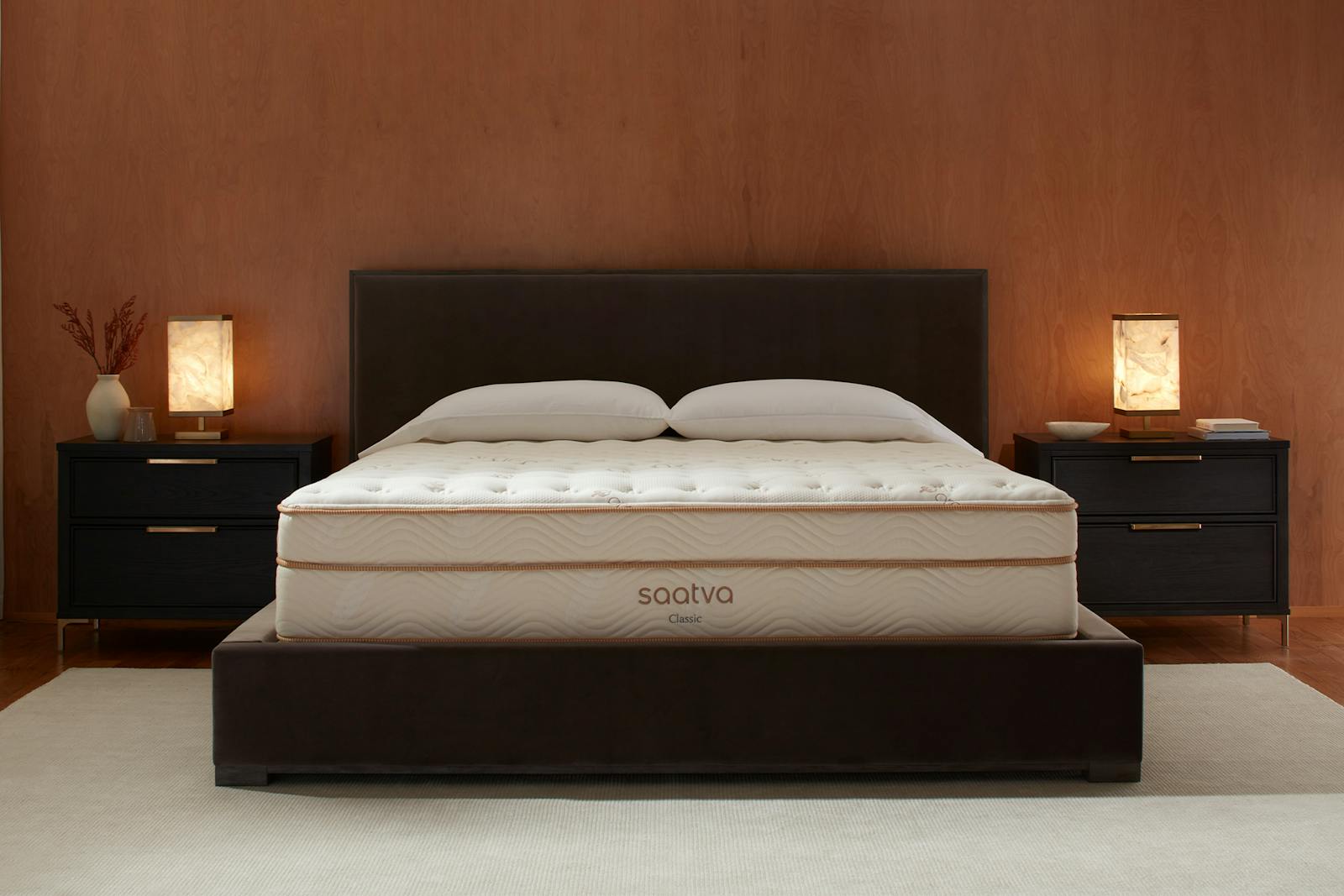
Current manufacturer lineups illustrate the variation. Tempur-Pedic lists current models from 10 to 13 inches. Purple lists models from 8 to 18.5 inches. The Saatva Classic comes in 11.5-inch and 14.5-inch profiles. Those numbers are useful for planning, but they do not create a ranking across brands or even across models within one brand.
A shopper should not turn those examples into a rule that 12 inches is standard or 14 inches is premium. Brands measure and describe constructions differently, and a taller profile may come from extra comfort material, a taller coil unit, an integrated topper, or another design choice. Read the complete specification rather than buying an inch count.
Read what makes up the height
Break the listed profile into its major parts. Look for the cover or quilted top, comfort layers, transition material, support core, and any reinforced base layer. The same overall thickness can be divided in very different ways. If the maker does not publish every measurement, record what is available and avoid filling the gaps with assumptions.
Pay special attention to the amount and type of material closest to the surface because that is part of how the mattress delivers its advertised feel. Then check the support-core design and the exact firmness option. More total material may add cost and weight without solving the preference that matters to you.
Calculate the finished bed height
Do not evaluate the mattress in isolation. Add the height of the frame, foundation or platform, and mattress. Include a thick pad or topper if it will remain on the bed. That sum is the finished sleep-surface height you will use every day.
Compare the result with your current bed. Sit on the edge and notice whether your feet reach the floor comfortably and whether standing up feels manageable for you. This is a personal setup check, not a medical standard. Also check windows, sloped ceilings, wall shelves, and the amount of headboard that will remain visible.
Use the base to adjust height when possible
A mattress is only one part of the height equation. Some foundations are offered in standard and low-profile versions, and some platform frames need no separate foundation. Choosing a lower base can keep a thicker mattress at a practical finished height without changing the mattress itself.
Verify every component before changing the setup. The mattress maker may specify a solid surface, slat width and spacing, center support, or a particular foundation type. A thinner foundation is useful only when it still meets those requirements and works with the frame's capacity and dimensions.
Check adjustable-base compatibility
Thickness can matter when a mattress must bend on an adjustable base, but inches alone do not decide compatibility. Construction, flexibility, size, and the maker's written approval all matter. Confirm the exact model, profile, and adjustable base rather than assuming every foam or hybrid mattress will work.
Saatva currently states that the 11.5-inch Classic works with its adjustable base and most other adjustable bases, while the 14.5-inch version does not have the required flexibility. That is a model-specific rule, not a general cutoff. Save the compatibility language and warranty terms for the mattress you actually order.
Match the profile to sheets and protectors
Measure from the bottom seam to the highest point of the mattress, then account for any pad or topper that will stay under the fitted sheet. Compare that total with the sheet maker's pocket-depth limit. A pocket that is too shallow can pull loose, while an extremely deep pocket may bunch on a lower profile.
Do not rely only on labels such as standard or deep pocket. Tempur-Pedic, for example, says some of its current sheet sets fit mattresses up to 13 inches and another style fits up to 15 inches. The useful number is the actual capacity of the exact sheet, not the marketing category.
Account for weight, moving, and delivery
A taller mattress can be heavier, but construction and size also affect weight. Check the listed product weight for the exact size and profile. Then consider stairs, tight turns, elevators, bed-frame assembly, periodic rotation if recommended, and whether the mattress has usable handles. Handles are often intended for positioning, not carrying the full mattress, so follow the maker's instructions.
Measure the delivery route even for a compressed mattress. The box may fit through the door more easily than a finished mattress, but future moving, rotating, or returning may require handling the expanded product. White-glove delivery can reduce setup work, yet its removal and return terms should be checked separately.
Keep bunk, trundle, and guardrail limits separate
Special frames can impose a maximum mattress height. A bunk bed needs enough guardrail to remain above the mattress, and a trundle must fit beneath the upper frame with bedding in place. Murphy beds and enclosed storage frames can also have thickness, weight, or construction restrictions.
Use the frame maker's exact instructions and the mattress maker's support rules together. Do not choose a thinner mattress only because it fits the opening if its base or construction is not approved for that use. If either document is unclear, ask both companies for a written answer tied to the exact model numbers.
Compare two profiles without guessing
When one mattress comes in more than one height, ask what actually changes. Is the difference only a taller coil unit, or are the comfort layers, firmness, weight, price, sheet needs, and base compatibility different too? Saatva says its two Classic profiles have the same comfort, quality, and durability, while its specifications show that the taller versions weigh more. That makes the choice mainly about setup constraints for this particular model.
For different models, do not transfer that conclusion. Build a small comparison with exact height, layer design, firmness, base rules, weight, total setup cost, sheet capacity, trial, and return terms. Thickness should stay in its proper column rather than standing in for all the specifications you still need to compare.
Choose the profile that fits the complete bed
A practical mattress thickness is one that gives you the construction and feel you want while keeping the finished bed usable and every component compatible. Eliminate any option that conflicts with the frame, foundation, adjustable base, guardrail, sheets, room, or delivery route. Then compare the remaining mattresses on their real materials, firmness, policies, and total cost.
Before checkout, verify the exact profile in the cart and save the product specifications. A model name may cover more than one height, and the differences can affect weight, compatibility, or accessories. The best answer is not a universal number. It is the lowest-risk complete setup that meets your priorities without asking thickness to prove qualities it cannot prove.
- Exact mattress height and the layers that create it
- Finished bed height with frame, foundation, and any topper
- Written base and adjustable-base compatibility
- Sheet and protector pocket depth
- Product weight and delivery route
- Headboard, window, bunk, trundle, or Murphy-bed clearance
- Price, trial, return terms, and warranty for the exact profile
Sources
- Tempur-Pedic: Current Mattress Heights
- Purple: Current Mattress Heights
- Saatva: Saatva Classic Heights
- Saatva: Classic Adjustable Base Compatibility
- Tempur-Pedic: Sheet Depth and Mattress Height
- Saatva: Saatva Classic Specifications
Sources were reviewed for this article on October 25, 2026.