COMPARISONS
Latex Hybrid vs. All-Latex Mattress: Which Should You Choose?
Both constructions can place latex near the sleep surface, but the support core changes the complete mattress. Compare exact models rather than treating latex as one uniform category.
THE SHORT VERSION
Choose a latex hybrid when you want latex comfort layers with a coil support core and the exact model offers the height, edge design, delivery, and firmness you need. Choose an all-latex mattress when you prefer a coil-free construction, value a design that may be flippable or built from replaceable latex layers, and can manage its weight and price. Neither type is automatically firmer, cooler, more durable, or better for motion. Compare the amount and type of latex, coil design or latex core, finished height, mattress weight, firmness choices, zoning, edge construction, adjustable-base compatibility, certifications, trial, return fee, and warranty. The construction label narrows the field, but the complete model should decide the purchase.
Start with the support core
A latex hybrid combines one or more latex layers with an innerspring support unit. An all-latex mattress uses latex for both the comfort system and the deeper support core. Covers, wool layers, quilting, adhesives, zoning, and fire barriers can still vary within either category.
Ask for a complete layer diagram. The word latex does not reveal how many inches are present, whether the latex is Dunlop or Talalay, or what sits underneath it. A thin latex layer over coils and a nine-inch all-latex build are different products even when both lead with natural latex.
Do not assign one feel to either category
Coils and latex can be engineered in many firmness levels, zones, and layer arrangements. The finished feel depends on the cover, latex formulation, layer thickness, coil design, support core, and how the parts work together. A hybrid is not automatically firm, and an all-latex mattress is not automatically soft.
Use the manufacturer's stated firmness only as a starting point. Compare options within the same model and confirm the choice during a valid home trial. Do not turn a material label into a comfort promise.
Compare edge design model by model
A latex hybrid can use firmer perimeter coils or another reinforced edge. An all-latex mattress can change firmness near the perimeter, use a uniform core, or provide no separate edge feature. The construction category alone does not tell you how sitting or sleeping near the edge will feel.
Ask what creates the edge and whether the specification applies to every size. If edge use matters, include it in a showroom comparison or home-trial checklist without inventing a score from the layer diagram.
Treat movement as a tradeoff, not a verdict
Coils add moving components, while an all-latex core removes the spring unit. That difference can affect how motion travels, but coil type, individual wrapping, latex thickness, bed size, base, and sleeper movement also matter.
Do not assume every all-latex mattress isolates more movement or every hybrid is easier to reposition on. Define the disturbance you want to reduce and compare the exact models. Couples should also consider edge use and available sleeping width.
Height can differ more than the label suggests
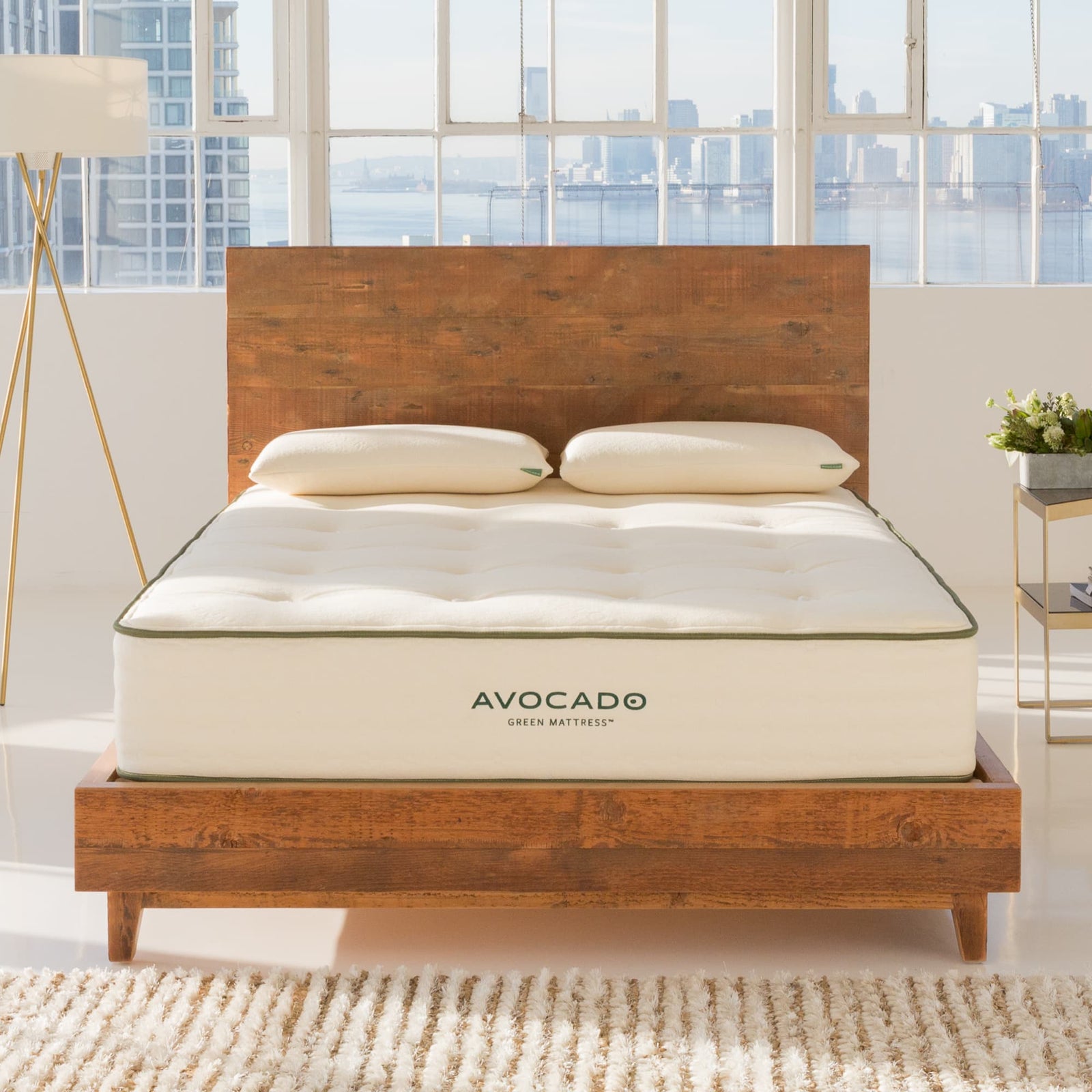
The support core affects finished height, but neither construction has one standard profile. Saatva currently lists its Latex Hybrid at 12 inches and its all-latex Zenhaven at 10 inches. Avocado lists its all-latex model at 9 inches while its Green hybrid varies by firmness and added comfort layers.
Calculate the finished bed height with the foundation or adjustable base. Check sheet pocket depth, headboard position, guardrails, and ease of getting into bed. Extra height is not a quality grade.
Plan for mattress weight and handling
Latex can be heavy, and removing coils does not guarantee an easier mattress to move. Saatva currently lists Queen weights of 120 pounds for its Latex Hybrid and 125 pounds for Zenhaven. Avocado lists its Queen all-latex model at 128 pounds.
Check the exact size and configuration before delivery. Consider stairs, narrow turns, rotating instructions, future moves, and whether the seller provides in-room setup. Split sizes can reduce the weight of each piece but add a center seam and separate bedding considerations.
Look at firmness flexibility
Some all-latex mattresses use a flippable design or rearrangeable layers, but that is a model feature rather than a rule. Saatva's Zenhaven is currently dual-sided with two firmness choices. Avocado's all-latex model is listed in one medium option. Latex hybrids can offer one feel or several firmness and pillow-top choices.
Value flexibility only if you will use it. A flippable mattress can be harder to handle, and an exchangeable layer is useful only when the policy clearly explains timing, cost, shipping, and who performs the change.
Verify the base and adjustable setup
Both constructions may work with adjustable bases, platforms, or foundations, but compatibility depends on the exact mattress and support system. Check slat width and spacing, center support, weight capacity, and any required foundation.
Saatva currently lists both its Latex Hybrid and Zenhaven as compatible with its adjustable bases. Avocado lists its all-latex model as adjustable-base compatible. Those examples do not establish compatibility for another brand or an older base. Follow the warranty requirements for the product you buy.
Read latex certifications by scope
GOLS, the Global Organic Latex Standard, sets requirements for latex products made from organic raw material and addresses processing, manufacturing, packing, labeling, trading, and distribution. A claim should identify the certified material or finished product and be verifiable through the certifier.
A certified latex layer does not automatically certify the coils, cover, wool, adhesives, or complete mattress. Ask for the certificate holder, scope, product name, standard version, and validity period. Keep latex certification separate from textile or emissions certifications.
Compare price through the complete design
An all-latex mattress may contain more latex, while a hybrid adds a coil unit and its own construction details. Either can cost more depending on latex volume, sourcing, certifications, size, delivery, and brand policies. Price alone does not reveal material quantity or fit.
Compare the same size and firmness on the same date. Include delivery, setup, removal, foundation, return fee, and any layer exchange. A lower sticker price can become the higher-risk purchase when the return process is difficult.
Build a two-construction comparison
Use one column for each finalist and keep every specification tied to a source date. Leave unknown fields blank instead of borrowing details from another model.
The comparison should make the support core and practical ownership differences visible without pretending the materials predict your personal comfort.
- Exact model, generation, size, firmness, and seller
- Latex type, certification, thickness, zones, and layer position
- Coil count, coil type, zones, and perimeter design when present
- All-latex core design, layers, and flipping or rearranging instructions
- Finished height, mattress weight, and delivery method
- Base requirements and adjustable-base compatibility
- Trial, minimum use period, return fee, exchange process, and warranty
- Complete delivered price and dated source links
The practical answer
Choose a latex hybrid when the exact coil-supported design and ownership details fit your priorities. Choose all-latex when a coil-free core, a particular latex construction, or model-specific flexibility matters more. Neither category wins without a complete product comparison.
Start with the support core, then compare latex layers, firmness choices, height, weight, edge design, movement, base requirements, certifications, price, and policies. The better mattress is the documented model whose full set of tradeoffs works for your bed and household.
Sources
- Saatva: Latex Hybrid Construction and Specifications
- Saatva: Zenhaven All-Latex Construction and Specifications
- Avocado: Hybrid and All-Latex Mattress Comparison
- Avocado: All-Latex Mattress Dimensions and Weight
- Avocado: Green Latex Hybrid Specifications
- Control Union: Global Organic Latex Standard
Sources were reviewed for this article on November 5, 2026.